November 13: Remembering, understanding, and acting against terrorism, extremism, and hatred
Religious leaders, families, teachers, and associations must take responsibility in educating new generations. We must promote an enlightened religious practice, open to dialogue and compatible with the values of our society. November 13 should not only be a day of commemoration. It should also be a reminder of our collective responsibility towards the future.
Published on 13 November 2026
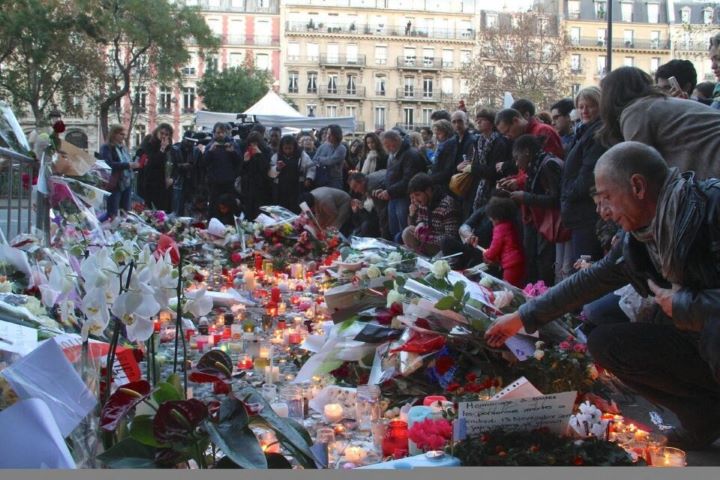
Remembering November 13, 2015, is honoring the victims.
November 13, 2015, will forever remain one of the most tragic dates in the history of France. That evening, members of the terrorist organization Daesh, also known as the Islamic State, committed several barbaric attacks in Paris and Saint-Denis. Men and women who were simply enjoying a concert, a football match, or a moment with friends were murdered. 130 people lost their lives and hundreds more were injured.
Behind these numbers, there are broken families, disrupted lives, and an entire society marked by this tragedy. But beyond the memory of the victims, we must also take the time to understand how such an ideology can be born, develop, and lead individuals to commit such atrocities. These terrorists were fanatics and extremists who claimed to act in the name of Islam and defend their religion.
Yet, killing innocents, spreading terror, and attacking people of different beliefs does not represent the spiritual life of millions of Muslims nor the human values that every society must protect. It is essential to remember one thing: belonging to a religion does not automatically mean knowing it, understanding it, or knowing how to practice it correctly.
Like in all disciplines, knowledge requires education, study, reflection, and learning. Religious ignorance, lack of knowledge of texts, ideological manipulation, and lack of education can create a favorable ground for extremist discourse and radicalization.
Extremism does not always start with a bomb or a weapon. It can begin in a person’s mind, with a hatred that gradually grows, with the rejection of others, with intolerance, and with the conviction that only one’s own group has the right to exist. This hatred first destroys the individual from within, and then it can turn against their neighbors, their community, and ultimately the entire society.
At this stage, it sometimes becomes more destructive than a weapon, as it directly attacks human conscience and our ability to live together. That is why we must not only fight the consequences of terrorism but also question its origins, mechanisms, and ways to prevent it from developing. The first responsibility begins in our families.
Being a father or mother is not just about giving birth to a child, feeding them, and providing them with a roof. Our true responsibility also begins after their birth: accompanying them, educating them, passing on values, and teaching them to understand the world in which they are growing up.
From a young age, we must explain to our children that there are many religions, that beliefs can be different, and that this diversity is part of the construction of our society. We must teach them that one can be a believer without despising those who do not share their faith, that one can defend their convictions without hating those of others, and that respect for human beings must always remain a priority.
Our society is gradually built from our families, our schools, our neighborhoods, and our daily relationships. The future we wish to leave to our children also depends on the education we give them today. We must prepare a generation capable of living together, united around common values, despite differences in religion, culture, and beliefs.
As Muslims, we also have a particular responsibility. We must clearly denounce terrorism, extremism, and radicalism when they claim to speak in the name of our religion. We cannot allow the ideologues of hatred to appropriate Islam and use its name to justify massacres, discrimination, or violence.
Our responsibility is twofold: first, to combat and unequivocally denounce all forms of terrorism and extremism; second, to show the world, through our words but especially through our actions, the true face of an Islam based on knowledge, responsibility, compassion, justice, and respect for every human being. Silence must never give ground to extremists.
Religious leaders, families, teachers, and associations must take responsibility in educating new generations. We must promote an enlightened religious practice, open to dialogue and compatible with the values of our society. Finally, November 13 should not only be a day of commemoration. It should also be a reminder of our collective responsibility towards the future.
We must remain united against those who seek to divide our societies, to pit religions against each other, and to turn our differences into sources of hatred. The fight against terrorism does not rely solely on security forces: it also begins with education, knowledge, dialogue, and the courage to denounce all forms of radicalism.
Today, we think of the victims, their families, and all the people whose lives were disrupted that evening. Their memory compels us to never trivialize hatred, to never accept violence in the name of a religion, and to never abandon the values that allow us to live together.
Remembering November 13, 2015, is honoring the victims. But it is also taking our responsibilities so that future generations can live in a society of peace, freedom, tolerance, and mutual respect.
S. M. M.
(*) European Director of the World Council of Imams
The editorial team recommends
- Samuel Paty and Dominique Bernard: fighting religious fanaticism to defend the Republic and freedom of expression
- October 7: a tragedy for Israel, a shame for Islam, and a revealer of the excesses of Islamism
Fancy reading all the articles?
Unlock all articles straight away. No obligation.