Commemoration of the November 13, 2015 attacks: The prime number
Eleven years have passed. We have protected ourselves. The archway has become the ordinary threshold of our pleasures, we open our bag at the entrance of a hall as we present our ticket, and the Sentinelle soldiers are part of the decor just like the newsstands and the Morris columns. Police officers and intelligence agents have done more than is said: behind every attack that did not happen, there are names that no one will ever know. But a society does not delegate its defense to its guardians, and a barrier protects without saying anything about what it guards.
By Caroline Yadan (*) and Rubens Lévy
Published on 13 November 2026
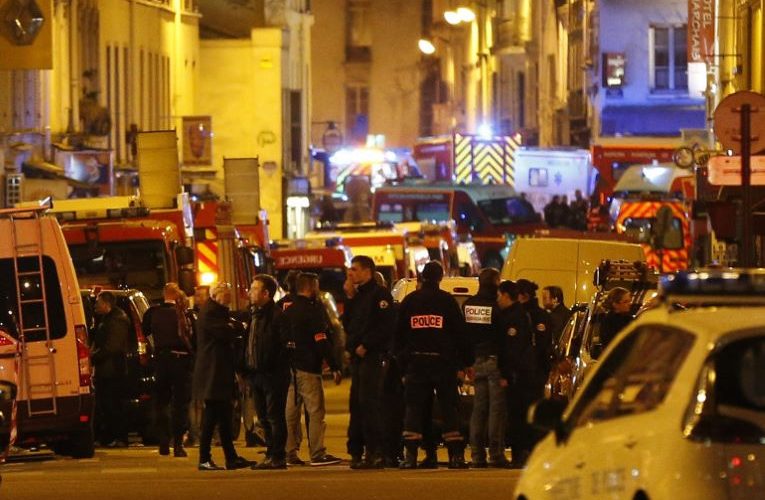
Three men enter the Bataclan. Ninety people will not come out.
Eleven cannot be divided. Mathematicians call these stubborn numbers prime, as they can only be divided by one and themselves, and no product of smaller numbers can reconstruct them. Eleven years after November 13, 2015, the calendar, unknowingly, tells the truth. That night does not decompose into previous attacks. It is not the sum of Toulouse and Montauban, of rue Nicolas-Appert and porte de Vincennes.
Since 2012, the killers chose. Soldiers, Jewish children in front of their school, cartoonists gathered in an editorial meeting, customers shopping in a kosher grocery store. The Jews of France already knew that one can die for being born Jewish in our country, and they had long known it almost alone. On November 13, there is no more choice. It is enough to be there. At 9:40 PM, three men enter the Bataclan. Ninety people will not come out. A little earlier, at the gates of the Stade de France, the first suicide bombers in our history blew themselves up. A total of one hundred thirty dead, and the first day of a time we have not finished living.
In 1989, Jean-Louis Aubert sang: “In the name of whom, in the name of what, shed the blood of an innocent?”, the same Aubert who sang that he dreamed of another world, just a few years earlier. The question was still waiting for an answer that could be understood, if not admitted. The bombs of that decade served states and demanded the release of
prisoners, abject calculations of which at least a list could be drawn up. That same year, an Iranian ayatollah sentenced a novelist to death for a book, and it was not yet realized that the response had changed in nature. Twenty-six years later, it falls, terrible in its sincerity, in a statement that designates Paris as the “capital of abominations and perversion” and where one would search in vain for something to negotiate.
What they wanted to destroy is nothing heroic. A bistro table where nothing useful is done, a bo bun at Petit Cambodge, a France-Germany match without stakes that one watched on TF1 with a distracted eye, boys and girls pressed against each other in the pit of a mythical rock hall, the music too loud and the sweat, and then this slightly silly, slightly magnificent carefreeness of people who do not believe they owe anyone an account of how they spend their Friday night. The innocent of the song looks like this. Their doctrine calls impure what we have never bothered to name, as it seemed so obvious to us.
Eleven years have passed. We have protected ourselves. The archway has become the ordinary threshold of our pleasures, we open our bag at the entrance of a hall as we present our ticket, and the Sentinelle soldiers are part of the decor just like the newsstands and the Morris columns. Police officers and intelligence agents have done more than is said: behind every attack that did not happen, there are names that no one will ever know. But a society does not delegate its defense to its guardians, and a barrier protects without saying anything about what it guards.
We have not defended ourselves. Since then, Samuel Paty has been decapitated near his college and Dominique Bernard stabbed in front of his high school. Anti-Semitic acts have reached stratospheric levels. And each time the same caution returns, the same haste to not name, as if designating Islamism, of which Muslims are everywhere in the world the first victims, would offend them. As for the killers and their entire community of thought, we stubbornly refuse them our hatred.
Every integer, one learns in middle school, decomposes in only one way into prime numbers, which are the bricks of which the rest is built. What we have become in eleven years decomposes in the same way, and at the bottom of every archway, of every prudent silence, one finds November 13, irreducible. The assassins have changed our thresholds and our habits, they have taught us to look askance at the forgotten bag under a subway seat. It remains to be seen whether this first day will also have been the first of a long retreat, or if we will finally know how to defend, without looking down, this lightness that they wanted to kill along with the one hundred thirty.
C. Y. and R. L.
(*) deputy in the 8th constituency of French citizens abroad
Fancy reading all the articles?
Unlock all articles straight away. No obligation.