Samuel Paty and Dominique Bernard: fighting religious fanaticism to defend the Republic and freedom of expression
As a Muslim religious leader, I believe it is our duty to face this reality head-on, without turning a blind eye and without trying to minimize the seriousness of these acts. We must have the courage to clearly denounce radical Islamism, jihadism, and all forms of fanaticism that claim to justify violence in the name of God.
Published on 16 October 2026
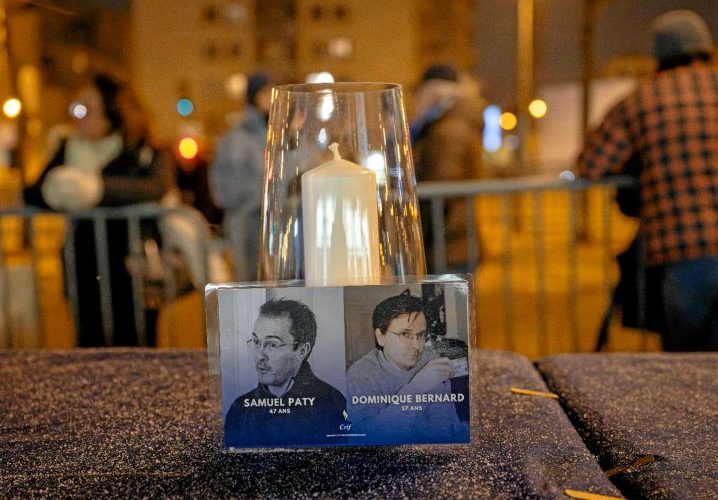
"In honoring Samuel Paty and Dominique Bernard, we must remember their commitment to education and future generations."
Not long ago, tragic events deeply marked our country and our society. Samuel Paty, a history-geography teacher, was murdered on October 16, 2020, in Conflans-Sainte-Honorine, and Dominique Bernard, a literature teacher, was murdered on October 13, 2023, in Arras, both victims of jihadist terrorism. Two teachers, two lives brutally taken, two tragedies that remind us that religious fanaticism can become a direct threat to our society, our freedoms, and our common future.
As a Muslim religious leader, I believe it is our duty to face this reality head-on, without turning a blind eye and without trying to minimize the seriousness of these acts. We must have the courage to clearly denounce radical Islamism, jihadism, and all forms of fanaticism that claim to justify violence in the name of God.
No human being should be threatened or murdered in the name of a religion. No religious belief can justify the murder of a teacher.
When religion is used as a weapon
In the case of Samuel Paty, his assassin targeted him after a controversy related to a lesson on freedom of expression and the cartoons of Muhammad. In the case of Dominique Bernard, the attacker was a radicalized individual who claimed his attack in the name of the Islamic State organization.
These two murders are different in their context, but they reveal the same reality: radicalized individuals have considered that their ideology could be placed above human life, laws, and the fundamental principles of our society.
The problem does not lie in having faith, practicing a religion, or defending one’s beliefs. Religious freedom is a fundamental right. The problem begins when some claim to impose their religious interpretations through intimidation, hatred, or violence.
By using the name of Islam to justify their crimes, these terrorists also harm the millions of Muslims living in France, who respect the laws of the Republic and wish to build their future in peace. Their acts contribute to fueling amalgams, discrimination, and anti-Muslim acts. They thus harm Muslims themselves while attacking the foundations of our society.
We must therefore reject two mistakes: allowing extremists to speak on behalf of all Muslims and, conversely, failing to denounce the ideologies that truly fuel terrorism.
Samuel Paty and Dominique Bernard: fighting religious fanaticism to defend the Republic and freedom of expression
A teacher does not just impart knowledge. They help young people understand the world, develop their critical thinking, learn to argue, and become free and responsible citizens.
The republican school is a place where students can learn about religions, history, ideas, and different beliefs, while understanding that no one can impose their beliefs on others by force.
This is precisely why freedom of expression, secularism, and the independence of education are so important. They allow everyone to believe or not believe, to practice their religion or not have one, without facing threats.
When Samuel Paty was murdered, it was not just a teacher who lost their life. When Dominique Bernard was killed, it was not just a teacher who was struck. These crimes also targeted the principles that allow our society to live together: freedom, equality before the law, freedom of conscience, and the right to impart knowledge without intimidation.
The French Republic must protect its teachers, its students, and all those who defend these principles. But this responsibility cannot rest solely on the institutions: it concerns us all.
As a religious leader, I refuse to be silent in the face of fanaticism
For us, religious leaders, this responsibility is particularly important. We cannot be content to condemn terrorism after each attack. We must also act upstream, combating hate speech, extremist interpretations, and forms of radicalization that can lead some individuals to consider violence as a religious obligation.
It is not enough to say that terrorists do not represent Islam. We must also explain why their acts and their ideology are incompatible with respect for human life, moral responsibility, and peaceful coexistence.
Religion must never become an instrument of political domination, hatred, or destruction. It must contribute to human dignity, justice, solidarity, and peace.
As a Muslim and a religious leader, I refuse to allow the name of Islam to be used to justify the assassination of a teacher, threaten citizens, or challenge freedom of conscience. Defending Muslims against amalgams also involves unambiguously fighting those who instrumentalize our religion to spread fanaticism.
Our commitment must be consistent: condemn terrorism, defend victims, protect freedoms, and fight against all forms of hatred, including anti-Muslim acts and anti-Semitism.
A fight that concerns each of us
Fighting Islamism, radicalism, and religious fanaticism is not solely the mission of imams, theologians, or religious leaders. It is a collective responsibility that concerns families, teachers, associations, public institutions, and every citizen.
Parents must be able to instill respect for others in their children. Teachers must be able to practice their profession without fearing for their lives. Religious leaders must have the courage to denounce extremist drifts, even when this approach is difficult. Citizens must be able to defend their beliefs without being threatened or silenced.
We must also understand that the fight against terrorism cannot be limited to security and repression. It requires a genuine battle of ideas, an education in discernment, and a constant commitment to freedom, respect, and responsibility.
Every time we refuse hatred, denounce an attempt at radicalization, and defend the freedom of another citizen, we contribute to protecting our society.
Never forget, never give up
In honoring Samuel Paty and Dominique Bernard, we must remember their commitment to education and future generations. We must also think of their families, their loved ones, their colleagues, and all those who continue to carry out their work in schools.
Their memory should not be limited to a ceremony or an annual publication. It should encourage us to take concrete action, to protect the school, and to defend the principles that allow people with different beliefs to live together.
These tragedies should not lead us to fear, retreat, or division. They should strengthen our determination to defend freedom of expression, secularism, and republican values.
Our fight against religious fanaticism must never stop. We must continue it with courage, determination, and responsibility, without yielding to hatred and without abandoning our principles.
Let us never forget Samuel Paty. Let us never forget Dominique Bernard. Let us defend our school, protect our freedoms, and ensure that no teacher is ever again murdered for doing their job.
Because defending freedom also means refusing to let fear and fanaticism decide for us what we have the right to teach, think, and say.
S. M. M.
(*) European Director of the World Council of Imams
The editorial team recommends
Fancy reading all the articles?
Unlock all articles straight away. No obligation.