October 7: a tragedy for Israel, a shame for Islam, and a revealer of the excesses of Islamism
October 7, 2023, will go down in history as one of the most tragic days in recent history, after the Holocaust. The attack carried out against Israeli civilians by Hamas and other armed groups, accompanied by massacres, kidnappings, and acts of extreme violence, cannot be regarded as a mere military episode. In my view, it also constitutes a profound tragedy for Muslims and a shame when it is committed or justified in the name of Islam.
Published on 7 October 2026
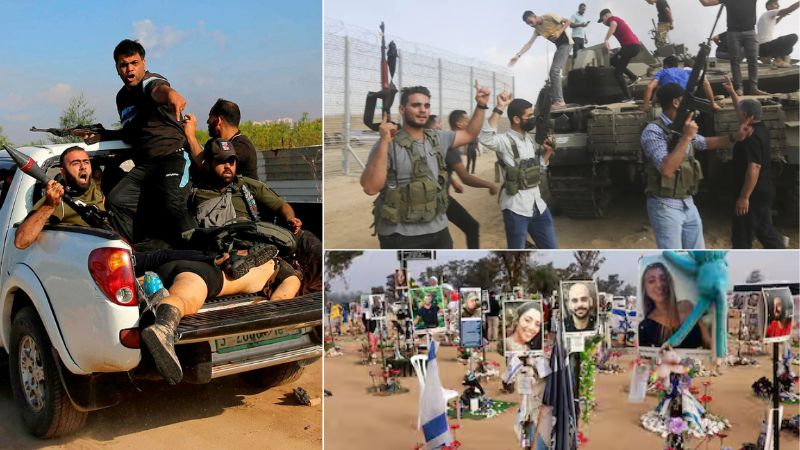
That is why October 7 raises a fundamental religious question: how can one massacre civilians, kill families, kidnap people, and then claim that these acts constitute an expression of Islam?
I believe it is essential to state clearly: terrorism, the massacre of civilians, and hatred of Jews can never be presented as authentic expressions of our religion. Islam cannot be reduced to the acts of those who use its vocabulary, symbols, and certain religious concepts to legitimize a political and ideological project.
This distinction is all the more important as many people outside the Muslim world still have insufficient knowledge of Islamic tradition, its jurisprudence, and its history. This ignorance can lead to a particularly dangerous confusion between Islam as a religion and Islamism as a political project, and then between Islamism and its most radical forms: extremism, fanaticism, and ultimately, terrorism.
After October 7, this confusion has worsened. When terrorists proclaim a “jihad” against Israel and claim to justify their actions by our noble religion, it is also ordinary Muslims who suffer the consequences. The perception of Muslims in many societies has been profoundly affected by this instrumentalization of Islam. Once again, those who claim to speak in the name of Islam have contributed to placing the burden of their own crimes on other Muslims.
Jihad cannot be a justification for massacre
As a specialist in Islamic jurisprudence, one question has always deeply troubled me: how can certain movements religiously justify offensive attacks, massacres of civilians, and terrorist acts by invoking the concept of jihad?
In the Islamic legal tradition, jihad is not a general permit to kill nor an instrument for a political group to arbitrarily declare war on whomever it wants. The questions of war, defense, authority, proportionality, and protection of non-combatants have been the subject of complex and ancient jurisprudence.
The protection of innocents and the prohibition of aggression are precisely principles that cannot simply be erased by uttering the word “jihad.”
That is why October 7 raises a fundamental religious question: how can one massacre civilians, kill families, kidnap people, and then claim that these acts constitute an expression of Islam?
For me, the answer is clear: one cannot.
The Iranian question
Another particularly troubling question remains: the role of the Iranian regime in supporting armed organizations that claim this confrontation.
This contradiction deserves to be examined seriously, including by Muslims themselves.
The regime of the Islamic Republic of Iran presents itself as a regime based on Shia Islam and a particular conception of Islamic jurisprudence. However, in the Shia legal tradition, the question of offensive jihad is far from being as simple as some contemporary political discourses might suggest. Historically, an important distinction exists between defensive jihad, when a community is attacked, and offensive jihad, whose legal conditions are much more restrictive and controversial.
It is precisely this contradiction that puzzles me: how can a regime that claims to act in the name of Islamic jurisprudence support armed movements operating beyond its borders and participating in regional conflicts that do not simply pertain to the immediate defense of Iranian territory?
The same question arises regarding Hezbollah and the Houthis: on what religious and legal basis can non-state organizations decide for themselves when a war is religiously legitimate, who must be fought, and in the name of what authority?
These questions are not only political. They are also theological and legal.
The existence of Jews and Israel
October 7 also reminded us of a reality that some still refuse to face: Jews exist, they have a history, a memory, a religious tradition, and Israel exists.
For a Muslim, our sacred book, the Quran, also informs us about Jews and Israel. This reality appears in several passages of the Quran. So, how can one have such ignorance regarding the existence of Israel and Jews on this land, when our own sacred book speaks to us of their history and presence?
How can one, in the name of Islam, deny this reality or consider that the existence of Jews and Israel is foreign to our own religious tradition?
The problem begins when political or ideological hatred transforms into religious hatred, when Jews are collectively held responsible for a political situation, or when the very existence of Israel becomes a justification for killing civilians.
Islam cannot be used to transform hatred of Jews into a religious principle.
A shame that must become an opportunity for reflection
I therefore say unequivocally that October 7 was a catastrophe for Israeli victims, but also a moral catastrophe for all those who saw Islam used to justify these crimes.
As a Muslim and a specialist in Islamic jurisprudence, I refuse to allow terrorists to speak in the name of my religion.
I also refuse to conflate Muslims with Islamists, Islam with Islamism, or faith with political fanaticism.
But this clarification must also come from within the Muslim world. We must have the courage to recognize our own contradictions, to question those who use religious concepts for political ends, and to remind that defending Islam does not mean defending those who commit crimes in its name.
The real challenge now is to rebuild a Muslim discourse capable of clearly condemning anti-Semitism, recognizing the dignity of Jews and Christians, defending civilians regardless of their nationality or religion, and distinguishing religious faith from ideological projects that seek to appropriate it.
October 7 should therefore not only be a date of remembrance.
It should also be a date of reflection for Muslims: what does jihad really mean in our tradition? Who has the right to declare war? What is the place of human life in our jurisprudence? And above all, how far can we allow political movements to instrumentalize our religion before we say to them: you do not speak in our name?
It is to this intellectual, religious, and moral responsibility that we must now face.
Defending Islam does not mean defending those who use its name to kill. Defending Islam also means having the courage to defend our religion against those who seek to transform it into an instrument of hatred, fanaticism, and terrorism.
S. M. M.
(*) European Director of the World Council of Imams
Fancy reading all the articles?
Unlock all articles straight away. No obligation.