Vote in the European Parliament against Islamist entryism: They talk about tolerance, Islamism advances
I am starting to get tired of this political comedy where everyone claims to be for freedoms, but where some seem to lose their voice as soon as it comes to defending freedom against those who want to reduce it.
Published on 9 October 2026
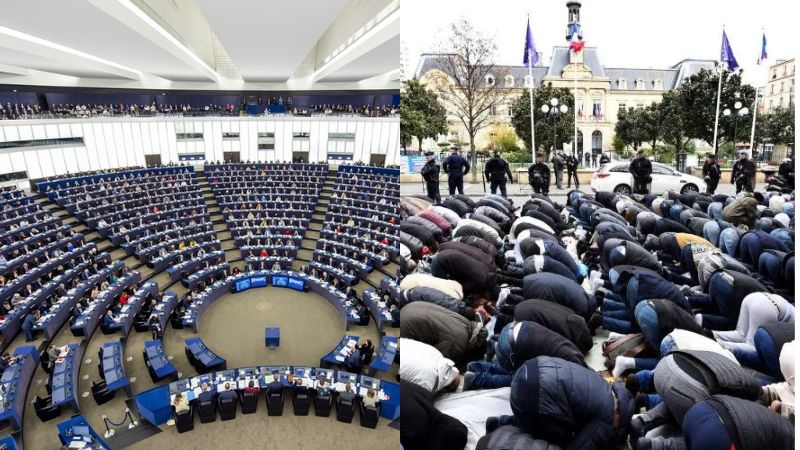
The European Parliament adopted a resolution against Islamist entryism. An important vote, which does not resolve anything on its own.
I am starting to get tired of this political comedy where everyone claims to be for freedoms, but where some seem to lose their voice as soon as it comes to defending freedom against those who want to reduce it.
On October 8, the European Parliament adopted a resolution against Islamist entryism by 381 votes to 167, with 15 abstentions. An important vote, which does not resolve anything on its own, but which finally raises a question that the Union has long avoided. What do we do when networks use the means of our democracies to try to weaken their principles?
Let’s look at the numbers. Let’s also look at those who voted against.
I do not ask anyone to share my atheism. I ask that the right not to believe, to criticize a religion, to leave a religion, and to live without having to seek permission from a god or its representatives be respected.
This right should be so obvious that it requires no justification. Yet, in part of the public debate, it seems to have become suspicious to name the threats that weigh on it.
Things to discover
The paradox is striking. Political leaders who claim to be for emancipation hesitate to confront ideologies that challenge gender equality, freedom of conscience, or the primacy of civil law. They fear, they say, of stigmatizing Muslims. This vigilance is legitimate when it protects citizens from discrimination. It becomes blindness when it prevents looking at the organizations and strategies that deserve to be examined.
Muslims are not Islamism. It must be repeated, because this distinction protects both citizens and the Republic. The former should never be held collectively responsible for an ideology. The latter should never renounce fighting an ideology for fear of displeasing.
By fearing to hurt sensitivities, we risk leaving defenseless those who fight for their freedom.
I think of the women who refuse religious assignment, of the Muslims who defend secularism, of those who want to live their faith without an organization claiming to speak for them, of all those who demand the right to doubt.
Who defends them when the beautiful consciences turn a blind eye? Who is outraged when individual freedom clashes with community injunctions?
The Republic should not choose its battles based on the comfort of its elected officials. I do not confuse a European resolution with a victory. The vote on October 8 does not constitute a general ban on the organizations targeted by the debate. It does not exempt from serious investigations or evidence. It will be necessary to control funding, examine networks, establish responsibilities, and scrupulously respect the rule of law. Any other method would be a fault. But the law must not become an alibi for impotence. Rigor requires that we act based on facts, not that we refrain from acting as soon as the subject becomes politically uncomfortable.
I was born in Algeria. I know what societies pay when religion claims to govern public life and when defenders of freedom end up remaining silent. I have no desire to see Europe reproduce, in different forms, the renunciations it should have learned to recognize.
Universalism is not a salon posture. It is a requirement that compels us to defend the same rights for all, even when this defense contradicts electoral calculations, alliances, and partisan habits. The European vote should therefore serve as a test of truth.
To those who voted against, I ask a simple question: what alternative guarantees do you propose to effectively combat Islamist entryism, without stigmatizing Muslims and without weakening public freedoms?
Your arguments must be heard, examined, and confronted with the facts. But silence cannot serve as a substitute for politics. Because that is where our common future is at stake. We will not defend civil peace by turning a blind eye. We will not protect Muslims by abandoning those who challenge extremism. And we will not save democracy by allowing the belief that all ideologies are equal, regardless of the freedoms they grant or refuse.
The day the Republic is ashamed to defend freedom, those who want to impose chains on it will not even need to hide them.
Fancy reading all the articles?
Unlock all articles straight away. No obligation.