Weakened by the rejection of his housing measures, Spanish Prime Minister Pedro Sanchez calls for early elections on November 29.
On Friday, the deputies rejected two decrees that notably aimed to suspend the expulsions of vulnerable people until 2030. The difficulties faced by the Spanish Prime Minister are similar to those encountered by most democratic parties in Europe, both left and right.
Published on 5 October 2026
Like in many European metropolises, there is a shortage of affordable housing.
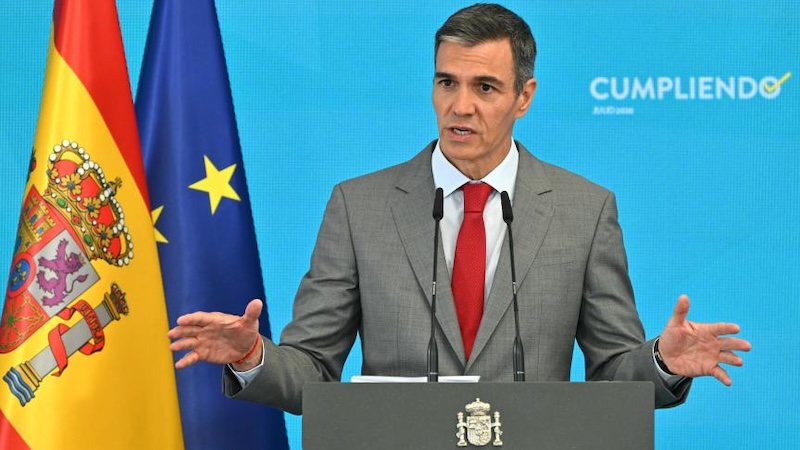
The Spanish Prime Minister, Pedro Sanchez, announced on Monday, October 5, the calling of early elections on November 29, after the rejection in Parliament of measures to protect tenants presented by his government.
The housing crisis affecting Spain has recently been exacerbated by the eviction in Madrid of Maricarmen Abascal, an 87-year-old woman, which triggered a wave of protests and the establishment of a camp of activists in the heart of Madrid.
Things to discover
In the early 2000s, Spain was indeed accustomed to building housing at a rapid pace. Its economy was entirely based on the real estate bubble. Thanks to favorable loans, middle-class families were able to embark on home purchases. The construction boom came to a sudden halt in 2008 following the subprime crisis, marking the end of its golden age.
Faced with the fact that landlords are no longer able to repay their loans, legal action has been initiated: approximately 600,000 evictions of families have been recorded in just five years.
Like in many European metropolises, there is a shortage of affordable housing, which is one of the main social issues in Spain and several countries in Europe, including France.
According to the Bank of Spain, the country, home to about 50 million inhabitants, has a deficit of 700,000 homes.
Tens of thousands of people protest
“To deeply carry out the pending reforms we need (…), we must mobilize and obtain a much broader progressive majority from Parliament, through which we can bend the elites, achieve new social progress, and continue to transform Spain,” said the socialist leader during a solemn address from the Moncloa Palace.
“I have decided to convene an extraordinary cabinet meeting this morning to dissolve the chambers and call for legislative elections to be held on Sunday, November 29,” he added.
Supported by the government, these two decrees notably aimed to suspend the expulsions of vulnerable people until 2030, or the automatic renewal of rental contracts. Gigantic housing protests gathered tens of thousands of people in Madrid and other Spanish cities on Saturday.
The editorial team recommends
- Ceuta: a shipwreck for Pedro Sánchez who clings to his rock by continuing to downplay the matter and praise his government’s management of the crisis.
- Migration crisis in Ceuta: Spanish Prime Minister Pedro Sanchez believes that Morocco’s border control has “failed”.
- Upcoming visit of the Algerian president to Spain: an explosive geopolitical context involving Morocco, Western Sahara, and Ceuta.
Fancy reading all the articles?
Unlock all articles straight away. No obligation.