Saudi Arabia in a deadlock after Trump’s refusal to strike the Houthis
The Middle East is increasingly facing a chaotic situation caused by Iran, which finances and arms its proxies (such as Hezbollah in Lebanon, Hamas, or the Houthis in Yemen). One of the main objectives of the attack by the United States and Israel against Iran is to destroy them. In reality, these Islamist groups continue to spread terror. The United States has refused to strike the Houthis for now. The American president said no to the Saudi crown prince.
By Karim Maloum
Published on 22 September 2026
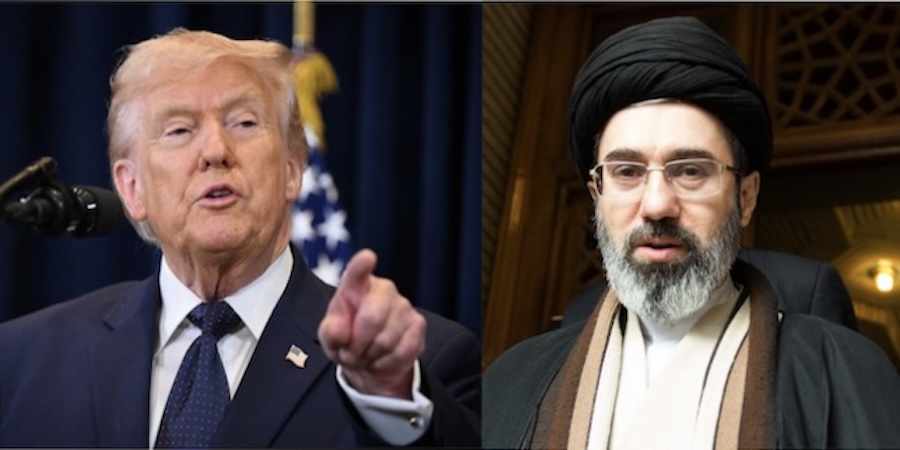
Neighboring Saudi Arabia, the world's largest oil exporter, finds itself stuck with this blockade of the Bab el-Mandeb Strait, which adds to that of the Strait of Hormuz.
The president of the Yemeni presidential council, supported by Saudi Arabia, sought the support of the United States in the fight against the Iranian-backed Houthis during a call on Sunday, September 20, with Donald Trump. A lost cause for now: according to information from the New York Times, the Saudi crown prince also urged the American president to intervene against the Houthis, which he has refrained from doing.
Things to discover
In a lightning offensive, the Yemeni Islamist Houthis took control on Friday, September 11, of the Yemeni coast along the Red Sea and the islands of the Bab el-Mandeb Strait, a strategic passage linking Europe to Asia. They now have total control of the Bab El Mandeb Strait, which is a strategic passage for global trade and part of Saudi oil. Moreover, they have established a foothold on Perim Island, located in the middle of the strait.
Analysts and countries in the Middle East, such as Saudi Arabia and Yemen, were awaiting the military position of the United States. A lost cause for now: the American president said no to the Saudi crown prince, seeking to avoid direct military action that could result in American casualties, and preferring to remain focused on the Strait of Hormuz.
Donald Trump has changed his mind several times in recent days about his strategy in Yemen, torn between Saudi pressures to strike the Iranian-backed Houthis and the risk of engaging the United States in a new front in the Middle East.
Neighboring Saudi Arabia, the world’s largest oil exporter, finds itself stuck with this blockade of the Bab el-Mandeb Strait, which adds to that of the Strait of Hormuz. Its oil infrastructure was also targeted this week by a large-scale drone and missile attack from the Houthis, which forced Saudi Arabia to temporarily shut down its East-West pipeline, used to bypass Hormuz, after being targeted by drones from Iraq according to Riyadh, which had already accused armed groups linked to Iran this summer of attempting to strike its territory.
Advances of the Houthi Islamists: American-Saudi failure in the closure of the Bab-el-Mandeb Strait
According to the New York Times, Crown Prince Mohammed bin Salman urged the American president to intervene and strike the Houthis. He “implored him once again to intervene to curb the rapid advance” of the Houthis, but Donald Trump, after considering it, changed his mind and renounced “at least for now” such strikes, according to testimonies from administration officials collected anonymously by the American daily. The White House declined to comment on this information.
The American president stated on Sunday that the Houthis had agreed not to attack the United States, according to comments reported by a Fox News journalist, as if to justify his decision not to strike them.
“The United States has a defense agreement with Saudi Arabia and we will always defend our allies,” was the only response from a senior administration official to the Times. Previously, the American president had already refused at least twice recently Saudi requests for strikes against the Houthis, according to information from the media Axios.
Donald Trump stated on Sunday that the Iranian-backed Houthis in Yemen, who have carried out attacks on Saudi Arabia, have agreed not to attack the United States, according to comments reported by a Fox News journalist.
The editorial team recommends
- After the Strait of Hormuz, Bab-el-Mandeb is closed by the Houthi Islamists.
- Advances of the Houthi Islamists: American-Saudi failure in the closure of the Bab-el-Mandeb Strait
- Saudi Arabia has launched airstrikes on several regions of Yemen following attacks by Houthi Islamists.
Fancy reading all the articles?
Unlock all articles straight away. No obligation.