November 11: Teacher unions call for a boycott of the commemorative ceremonies for the Dead for France, Édouard Geffray defends himself
Since the 2012 law, November 11 is also the day of tribute to all the "Dead for France." This year, all elementary schools, middle schools, and high schools must organize a ceremony in honor of the "Dead for France." The SNES-FSU, Sud Éducation, and the FSU-SNUipp denounce a "militarization of the school" and call on staff not to participate in these ceremonies, sometimes by going on strike. How can teacher unions refuse to participate in this new commemorative moment? The Minister of National Education, Édouard Geffray, defends a duty of memory and transmission.
Published on 6 November 2026
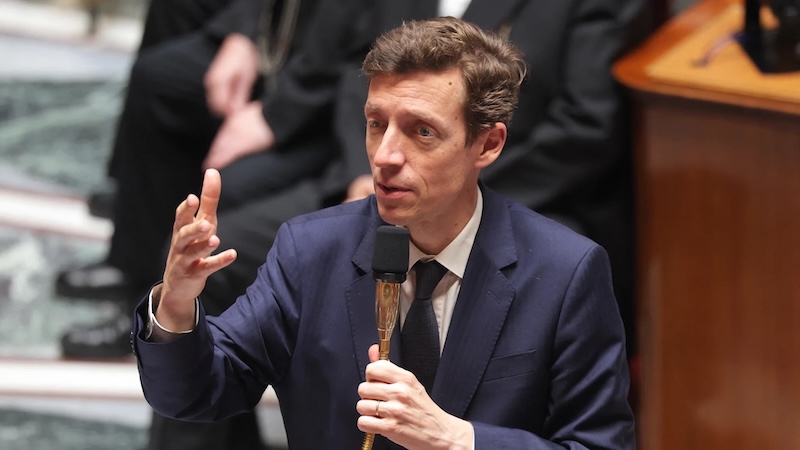
Since the 2012 law, November 11 is also the day of tribute to all the "Dead for France."
A circular dated July 2, 2026, signed by the Minister of National Education Édouard Geffray, establishes an annual commemorative ceremony in honor of all the “Dead for France” in every elementary school, middle school, and high school (public or private under contract), from CM1 to terminale. It takes place within the establishment, in the four days preceding or following November 11, and is part of a pedagogical history work,
elected partners, associations of veterans, and possibly security forces or the army may be associated with it. Several unions oppose it head-on and call for a boycott, sometimes through strikes,
This circular is strongly contested by several education unions. The SNES-FSU union denounces a “indoctrination,” a “militarization,” a “catch-all memorialism,” and a “worrisome patriotism.” It supports colleagues who refuse to prepare or participate in the ceremony, calls for not attending if personalities “whose values are not those of the School of the Republic” are present, and has filed a strike notice for the week of November 11. It demands the withdrawal of the circular and the guide.
The FSU-SNUipp (first degree) disagrees with the obligation, mentions the “militarization of the school,” the “military-patriotic catechism,” and advocates for “education for peace.” It calls for refusing tasks that would not fall under service obligations.
In the same vein, SUD Éducation asserts that this ceremony in honor of the Dead for France should not be celebrated in schools. Under the guise of “education for defense,” it would serve “an acceptance of war,” it added.
Other unions like CGT Éduc’action, FO in certain sections, and Parisian or local inter-union groups echo the same arguments, military intrusion, nationalist exaltation, instrumentalization in a “bellicose” context. The SNALC criticized calls for strikes as sending “a bad symbolic message.”
Minister Geffray responded that it is a “duty of memory and transmission,” a “legacy” to build a common destiny, and that honoring the end of the fighting is not militarization: “It is to forget more than a million dead for France, it is to forget that peace has a price.”
Since the 2012 law, November 11 is also the day of tribute to all the “Dead for France”
November 11, 1918 marks the signing of the armistice in Marshal Foch’s carriage, in the clearing of Rethondes (Compiègne forest). The fighting ceases at 11 o’clock, on the 11th day of the 11th month, after more than four years of war. France mourns about 1.4 million military dead and hundreds of thousands of wounded, November 11 mutilated, “broken faces.”
In total, the conflict results in nearly 10 million deaths. This date becomes a national holiday by the law of October 24, 1922, “national day for the commemoration of Victory and Peace.” In 1920-1921, the Unknown Soldier is buried under the Arc de Triomphe; the Flame of Remembrance is lit in 1923 and rekindled every evening since. Since the 2012 law, November 11 is also the day of tribute to all the “Dead for France” from the First and Second World Wars, colonial wars, external operations…
It represents the price paid for the defense of territory and freedom, the memory of the sacrifice of the Poilus and all those who followed, national cohesion in the face of adversity, and the reminder that peace is never free. It is the opposite of a “glorification of war”; it is the commemoration of its end and the abyssal human cost of “the last of the last” that contemporaries hoped would be unique.
The urgent necessity of this commemoration
This opposition reveals a deep divide. For part of the unionized teaching world, talking about November 11 in schools, hearing the names of the “Dead for France,” possibly singing La Marseillaise or involving representatives of the Nation, would be a “dangerous slide.” Yet, the memory of these dead is precisely what founded part of republican cohesion in the 20th century. Without clear and solemn transmission, younger generations risk not knowing what it means to “die for France,” nor why war memorials still populate every municipality.
In a context where national history is often relativized, fragmented, or contested, where some students arrive without a common anchor, and where ideologies openly reject the very idea of sacrifice for the Nation, this commemoration is not a pedagogical luxury; it is a civic necessity.
Refusing to prepare for or participate in it is choosing erasure rather than remembrance. The school of the Republic has the mission to transmit what unites, not just what divides. Honoring the dead of 1914-1918 and all those who followed is not preparing for war; it is reminding why peace must be defended and at what cost it was won.
Fancy reading all the articles?
Unlock all articles straight away. No obligation.