Inflow of nearly 7,500 migrants in ten days on an island of 12,000 inhabitants: Spain declares a state of emergency in the Canary Islands
The Spanish government declared a state of emergency in the Canary Islands after an influx of nearly 7500 migrants in ten days on one of the islands of the archipelago, which has 12000 inhabitants.
Published on 14 November 2026
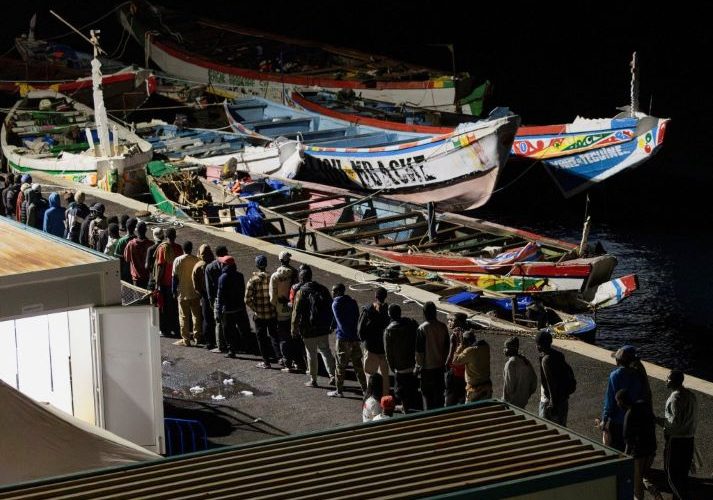
At the beginning of autumn, these arrivals became more frequent across all the islands of the archipelago.
The Spanish archipelago of the Canary Islands, located off the coast of West Africa, has seen a little over 7000 people arrive in the first ten days of November, mainly on the island of El Hierro, which has 12000 inhabitants. This influx is partly explained by the closure of other migration routes. Three months after the migration crisis in Ceuta, Spain is facing a new wave of irregular arrivals. More than 7400 migrants have landed in the Canaries in ten days, putting pressure on the public services of the archipelago. The socialist government of Pedro Sánchez is unlocking emergency resources, but regional authorities are denouncing a late response. A new crisis that calls into question Spanish border control policy.
La suite de cet article est réservée aux abonnés.
Connexion
The editorial team recommends
- A crisis within the crisis in Ceuta: there is chaos in the transfer of migrants from the beaches to a camp with 1,700 places.
- European Union: decrease in migrant arrivals by sea, but increase in deaths
Fancy reading all the articles?
Unlock all articles straight away. No obligation.