In Metz, Léon XIV will speak to Europe from the land of Robert Schuman
On the fourth day of his visit to France, on September 28, Metz will not only welcome a pope, it will welcome a message. Leo XIV has chosen Moselle to speak of peace at a time when Europe, once again, doubts itself.
Published on 24 September 2026
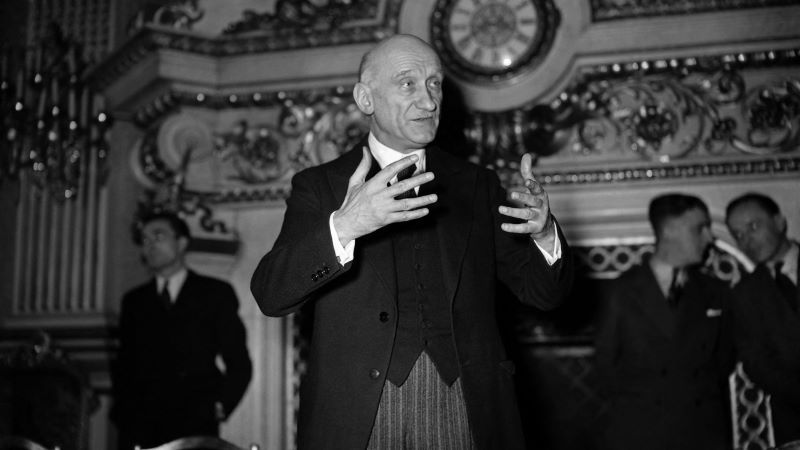
Robert Schuman experienced what Lorraine knows by heart, shifting borders, annexations, wars.
War in the East, tensions at the borders, temptation of withdrawal, the continent is searching for a language. The pope will seek it where European unity took shape, around a name, Robert Schuman.
The Luxembourger who became French. The deputy from Moselle. The minister. One of the fathers of Europe. The one who was already called, in his lifetime, the “saint in a suit”.
Things to discover
A man of the border
Born in 1886 in Luxembourg, raised in a German culture, naturalized French in 1919, Robert Schuman lived what Lorraine knows by heart, shifting borders, annexations, wars. He did not harbor resentment. He drew up a project.
After 1945, as France and Germany emerged from a century of conflict, he rejected the logic of revenge. On May 9, 1950, his declaration proposed placing Franco-German coal and steel production under a common authority. Not a hymn but a mechanism, pooling what had been used to wage war, to make war materially more difficult. Modern Europe begins there.
In Metz, this history is not abstract. Moselle has experienced three wars and two annexations. It has since become a laboratory of reconciliation, which is precisely what the pope will want to remind.
A Catholic in politics
What the Church remembers today is not only the architect of institutions, but the believer. Robert Schuman prayed every day, attended mass, read, often remained silent, and refused to act against his conscience. He defended the concordat in Alsace-Moselle, not out of nostalgia for the Ancien Régime, but out of fidelity to a land where religions remained inscribed in local law. He gave his money to charities. He lived without ostentation.
In 2021, Pope Francis recognized his heroic virtues and declared him venerable. This is the step that precedes beatification; to become blessed, a miracle attributed to his intercession would be needed. A second miracle would pave the way for canonization.
Leo XIV will not go to Scy-Chazelles, to the house where Robert Schuman wrote and to the chapel where he rests, too early, too political. The Vatican will not want to influence the process. But the entire program in Metz will be built around him.
The pope will not beatify anyone on Monday. He will do something else; he will place Robert Schuman at the center, as a model of an engaged layperson, a politician who did not separate faith from public action, a European who believed that hatred did not have the last word.
Emmanuel Macron and other European heads of state will be there
The visit will begin early. At 9:20 AM, Leo XIV will arrive at Metz-Nancy-Lorraine airport from Lourdes. The last stop of a journey that began in Paris. At 10 AM, at the Robert Schuman Congress Center, he will participate in an interreligious meeting. The location is not insignificant. Schuman, a convinced Christian, always viewed peace as a work between peoples, not as a confessional insularity. At 11 AM, in the same center, he will deliver a speech titled “To the roots of Europe for peace and unity.”
Emmanuel Macron will be there. Other European heads of state as well. The pope will want to say that Europe was not born from a market, but from reconciliation. That it was built through concrete gestures, not grand constructions. That world peace, according to the phrase from 1950, “cannot be safeguarded without creative efforts commensurate with the dangers that threaten it.”
At 2:30 PM, he will ride in the popemobile from Avenue Foch to Saint-Étienne Cathedral, passing through Avenue Robert Schuman, Place de la République, and the quays. The city will freeze. Tens of thousands of people are expected. At 4 PM, mass at Saint-Étienne, “the lantern of God,” under the stained glass of Chagall and the Gothic immensity. Homily by the Holy Father. A mass for peace, in a cathedral that has witnessed centuries and occupations. It is even said that the altar bears the bronze of old German cannons: the symbol, if true, will be almost too perfect. At 6:30 PM, departure for Rome.
What Metz will say
Leo XIV will not go to Brussels, he will not go to Strasbourg, he will be in Metz, more embodied. A city of three borders, a concordat land, the country of Schuman. By choosing this place, the pope will not only celebrate a European memory. He will pose a question: what remains of the founding intuition, now that prosperity is no longer enough to hold nations together? On Monday, in Metz, Robert Schuman will not be on the altar, he will be in the decor, in the names of the rooms, in the layout of the streets, in the subtext of every speech, a Catholic, a politician. And, for the Church, perhaps one day a blessed one. The pope will come to say that this idea is not a memory, it is a requirement.
The editorial team recommends
- Pope Leo XIV will deliver a speech at the UNESCO headquarters.
- In Saint Denis, Léon XIV will meet Bally Bagayoko and Stéphane Troussel before the youth vigil.
Fancy reading all the articles?
Unlock all articles straight away. No obligation.