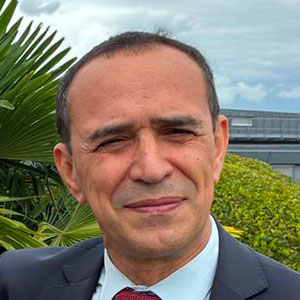
Leon XIV under the gaze of the Virgin Mary
When Leo XIV kneels at the grotto of Massabielle tomorrow evening, the gesture will seem simple. It is not; a pope does not come to Lourdes as one visits a monument, he comes to place himself under the gaze of Mary. The entire history of the place, all the Catholic faith that concentrates there, and the intention of this journey are contained in this attitude before speaking to France, the successor of Peter turns to Mary.
Published on 25 September 2026

On Saturday evening, Leo XIV will reflect at the grotto.
His visit to France will take Leo XIV from Paris to Lourdes and then to Metz. His motto is a phrase from the Gospel of John: “So that the world may have life.”
Lourdes is the spiritual heart of Catholics, not because the city is more Catholic than another, but because it has been, since 1858, “the place where Mary appeared and where the poor, the sick, and sinners come to be near her.”
What Mary is and is not for Catholics
One cannot understand Lourdes if one confuses veneration and adoration. Catholics do not adore Mary; for them, adoration belongs only to God. Mary receives a distinct honor, which tradition calls dulie for the saints and, for her alone, hyperdulie, a higher veneration, not because she is divine, but because she is the Mother of God. In 431, the Council of Ephesus established this title: Theotokos, “Mother of God,” everything else follows from this.
Things to discover
Mary is the first of the believers; she says “yes” at the Annunciation. She bears the Word. She stands at the foot of the Cross. In the Gospel of John, Christ gives her as a mother to the beloved disciple and, through him, to the entire Church. At Cana, her words summarize her mission: “Do whatever he tells you.” Her greatness is not to replace the Son, but to lead to him.
Three dogmas structure this place: Mary is the Mother of God, she conceived without original sin, the dogma of the Immaculate Conception, proclaimed by Pius IX on December 8, 1854. She is assumed into heaven, body and soul, the dogma of the Assumption, proclaimed by Pius XII in 1950. To these definitions is added an older conviction: Mary intercedes. One does not pray to her as one prays to God; one asks her to pray with and for oneself. The rosary, litanies, processions, shrines, Guadalupe, Fatima, Częstochowa, Lourdes are forms of this trust.
Mary makes the Christian mystery accessible. God remains invisible. A mother, one understands. The image of a woman who has known exile, the anguish of losing her child, and the silence of the tomb speaks faster than a treatise. The Church also calls her Health of the Sick, Comforter of the Afflicted, Refuge of Sinners; these titles express a function for those whom the world tires or crushes, Mary is the maternal closeness of God for Catholics.
When dogma descends into a grotto
The link is not accidental. Only four years after the Immaculate Conception, on February 11, 1858, Bernadette Soubirous, fourteen years old, says she sees “a lady” at Massabielle. Bernadette is asthmatic, barely catechized, raised in the dungeon of an old prison, and she speaks mainly Occitan.
Eighteen declared apparitions until July 16. On February 25, a spring gushes forth. On March 25, the feast of the Annunciation, the “lady” says: “Que soi era Immaculada Councepciou.” A poor child repeats the exact name of the dogma of 1854. For the Church, Mary herself takes up the title that Rome has just defined, not in a basilica, but in a grotto.
Bishop Laurence recognizes the apparitions on January 18, 1862; Bernadette dies in Nevers on April 16, 1879; Pope Pius XI canonizes her in 1933. “The Holy Virgin used me, then set me aside, like one does with a broom,” Bernadette said. For Catholics, the center is not Bernadette, it is Mary and through her, Christ.
From the request to build a chapel and to come in procession, the sanctuary is born: the basilica of the Immaculate Conception, the basilica of the Rosary, the basilica of Saint Pius X in 1958. Lourdes becomes one of the great pilgrimages of the world. The seventy healings recognized by the Catholic Church as miracles belong to its memory. But the daily miracle, for Catholics, is of another order; the sick occupy the first place there.
A mother for the little ones
The declared apparitions in the 19th century at Rue du Bac in Paris, La Salette in Vendée, and Lourdes follow the same logic. Mary does not manifest herself to the powerful. She appears to children, to the poor, hence the rosary, the Ave Maria, the candlelight procession. Each candle says the same thing as the Council of Ephesus, but in the language of bodies; we are not alone, a mother walks with us. This is what Leo XIV already said on February 11, at the grotto in the Vatican gardens, Mary “teaches us what suffering means, what love means, and what it means to entrust one’s life to the Lord.”
Popes, sons of Mary at Massabielle
John Paul II breaks the taboo in 1983. His motto, Totus tuus, (To you) made Marian filiation the heart of his papacy. He returns in 2004, sick among the sick. Benedict XVI comes in 2008, for the 150th anniversary, and speaks of the “smile of Mary.” Then silence lasts eighteen years; Pope Francis has never come to Lourdes as pope.
Leo XIV, Robert Francis Prevost, born in Chicago in 1955, an Augustinian, long a missionary in Peru, is elected on May 8, 2025. He takes the name Leo XIV and the social doctrine. His encyclical Magnifica Humanitas places the dignity of all life at the center. Coming to Lourdes, for him, is to inscribe this doctrine under the patronage of Mary.
Coming as a pilgrim
On Saturday evening, Leo XIV will reflect at the grotto. On Sunday evening, he will join the rosary and the candlelight procession. The missal for the journey is very Marian, fraternal concord, families open to life. To entrust oneself to Mary is not to place oneself under her protection and ask that one be led to Christ.
On Sunday afternoon, there will be the welcome of the hospital workers and the sick, then Leo XIV will deliver a much-anticipated speech on the end of life, as France adopted the law on “assisted dying” on August 18.
In Lourdes, it is the Virgin Mary who has sent to the spring. A pope who speaks of life at Massabielle does so in the name of a mother who, according to the Catholic faith, does not abandon anyone. A pope who will face the crisis of abuse. A closed-door meeting with seven victims; a speech to bishops still marked by the Ciase report, the mosaics of Rupnik covered on the basilica of the Rosary. One can no longer pray to Mary in Lourdes as if nothing had been revealed. A pope with a tired Church: dwindling vocations, wounded trust, hardened public debate. Lourdes offers what Paris cannot offer, a place where the Church gathers less to justify itself than to pray.
The editorial team recommends
- Pope Leo XIV’s Mass in Paris: nearly 600,000 registered for September 26, access perimeter expanded
- 80,000 young people for Pope Leo XIV: Catholic France has not had its last word.
Fancy reading all the articles?
Unlock all articles straight away. No obligation.