September 11, 2001: a distant yet vivid memory
By Yacine Aït Ouffella
Published on 11 September 2026
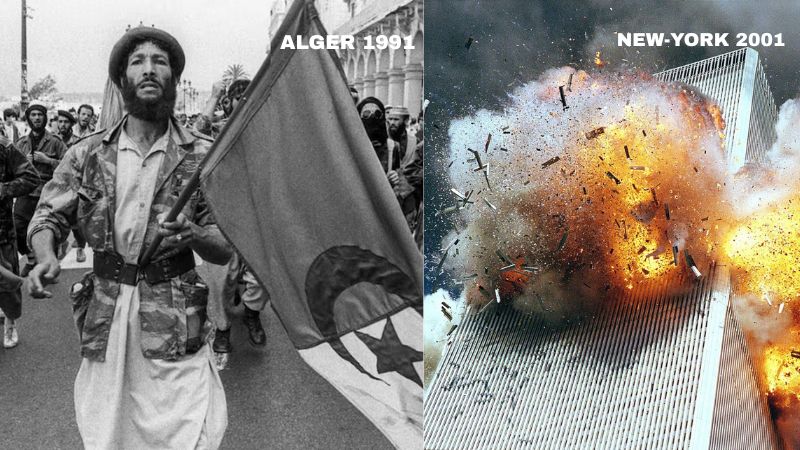
When suicide bombers hijacked planes and crashed them into two skyscrapers in New York, it quickly revived for them the feeling of insecurity experienced during the 1990s.
For Algerians, the events of September 11, 2001, when suicide bombers hijacked American airliners and crashed them into two skyscrapers in New York, killing thousands of people, quickly revived the feeling of insecurity they had lived through for years during what would be called the Black Decade, a national tragedy they had just endured. Twenty-five years later, it is difficult to only vaguely remember that day which would change the course of history. But for me, in addition to the events of September 11, it is the entire year 2001 that will be memorable.
In September, it had already been six months since Kabylie, my home region, was in flames. It was waging a different kind of war, while the scars of the years of Islamist terrorism were not yet healed. Fate wanted this region, which had paid a heavy price in the Algerian War, to pay once again, this time for democracy.
On April 18, 2001, two days before the commemoration of the Berber Spring of April 1980, Massinissa Guermah, an 18-year-old high school student, was shot dead by a burst of automatic gunfire fired by a gendarme in the gendarmerie premises of Beni Douala, in Kabylie. This event was the trigger for a revolt in Kabylie. Peaceful demonstrations were observed throughout the region.
As a delegate of the Citizen Movement of the Aarchs, a Kabyle organization born out of the events of the Black Spring of Kabylie in 2001, what was happening in the USA may have mattered little to me, as what concerned us most was the follow-up to our protest, especially given the hundred deaths caused by the real bullets fired by Algerian gendarmes, without hesitation on the crowds.
It was mainly about “surrounding” the protest after the march of June 14, 2001, which was also repressed in blood, knowing that despite the prohibitions on demonstrations decreed by the authorities and the attempts at dialogue initiated by the government, the tension remained high in Kabylie at the beginning of this autumn.
On this September 11, 2001, during a meeting, about fifteen delegates of the Citizen Movement were to designate their representatives for a meeting scheduled for October 3 with Ali Benflis, the Algerian Prime Minister at the time. However, this would not be the end of the popular protest, which would continue until 2003 with the return of Ahmed Ouyahia to the head of the government and the departure of the Algerian Gendarmerie from Kabylie.
Fancy reading all the articles?
Unlock all articles straight away. No obligation.