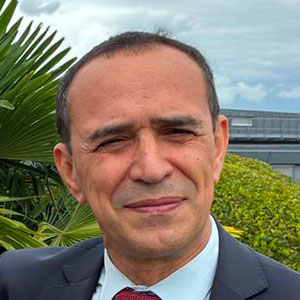
Bergeaud-Blackler case: after the failure of the defamation procedure, the funding of the University of Strasbourg questioned
New chapter in the case opposing Florence Bergeaud-Blackler, a specialist in frérisme at CNRS, to Iman El Feki, a doctoral student at the University of Strasbourg. After the cancellation of the defamation proceedings initiated against the researcher, her lawyer has referred the financial prosecutor regarding the conditions under which the university covered the legal fees of the doctoral student.
Published on 23 September 2026
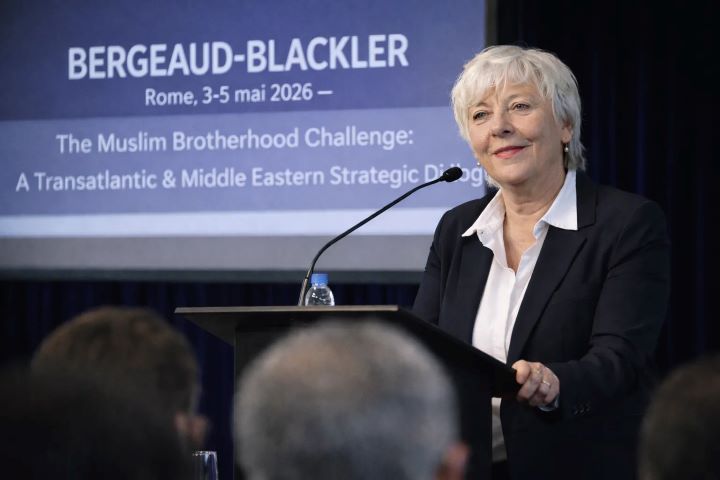
Florence Bergeaud-Blackler is calling for clarity on the conditions under which public funds were mobilized in a procedure directed against her.
The case is no longer being played out in the criminal court, but in the realm of the use of public funds. On September 18, Me Carine Chaix, lawyer for Florence Bergeaud-Blackler, sent a report to the financial prosecutor of the Grand Est Regional Chamber of Accounts. She asks him to examine the regularity of the University of Strasbourg’s coverage of the legal fees incurred by Iman El Feki in the defamation proceedings she initiated against the anthropologist.
From a defamation complaint to a question about public money
The dispute dates back to March 2025. Florence Bergeaud-Blackler had published a message on X regarding Iman El Feki, a contractual doctoral student in sociology at the University of Strasbourg. The CNRS researcher, author of Le frérisme et ses réseaux, included the doctoral student’s journey in a broader reflection on the influence she attributes to frérisme in certain academic sectors.
Iman El Feki decided to sue Florence Bergeaud-Blackler for defamation. However, the proceedings were ultimately canceled in June by the Strasbourg judicial court for procedural reasons. The substance of the dispute was therefore not adjudicated by the courts.
The case could have ended there. However, an element discovered during the proceedings changed that: the legal fees of the doctoral student had been covered by the University of Strasbourg.
Why did the University pay?
This is now the central question posed by the defense of Florence Bergeaud-Blackler. In her report, Me Carine Chaix relies in particular on a letter dated May 22, 2025, attributed to the president of the University of Strasbourg, Frédérique Berrod. According to the lawyer, this document indicates that Iman El Feki’s situation did not allow for the functional protection provided for by public service law. However, despite this impossibility, the University allegedly decided to cover her legal fees.
For the defense of Florence Bergeaud-Blackler, the question thus becomes simple: if this expense could not be incurred under the framework of functional protection, on what other legal basis could it be engaged by a public institution?
Me Carine Chaix refers the financial prosecutor
The lawyer believes that the funding of a criminal procedure initiated by a doctoral student against a researcher outside the University may not fall within the institution’s missions. She specifically invokes the principle of specialty applicable to public institutions and now asks the financial prosecutor to examine the conditions of engagement and execution of this expenditure as well as any potential consequences that may arise.
The report does not, of course, mean that an irregularity has already been judicially established. This is precisely what the authority being referred to is called to examine. A copy of the document has also been sent to the Minister of Higher Education and the public prosecutor.
A new episode particularly favorable to Florence Bergeaud-Blackler
For Florence Bergeaud-Blackler, this sequence represents a significant turnaround. Just a few months ago, it was she who had to defend herself in court. The proceedings initiated against her have ultimately been canceled. Now, it is the conditions under which the opposing party received financial support from a public institution that are the subject of a report.
The case takes on an even more particular dimension as Florence Bergeaud-Blackler devotes a significant part of her research to the Muslim Brotherhood, frérisme, and the influence phenomena she believes are at work in certain European institutions.
The academic context at the heart of the case
The report reminds us that Iman El Feki participated in 2024 in events related to the Collective Against Islamophobia in Europe (CCIE) and the Muslim Students of France (EMF). The lawyer links these elements to the government report published in 2025 on the Muslim Brotherhood and political Islamism in France.
These elements do not, in themselves, allow for the presentation of the doctoral student as belonging to the Muslim Brotherhood or a frériste organization, and Me Chaix’s document carefully avoids making such an accusation. They do, however, serve to place the case in the intellectual and institutional context that is precisely the subject of Florence Bergeaud-Blackler’s research.
The researcher has been advocating for several years that universities should be able to study Islamist phenomena and influence strategies freely, without specialists working on these issues being hindered or disqualified.
A question of academic freedom
That is why the use of university funds in a procedure targeting Florence Bergeaud-Blackler takes on a dimension for her defense that goes beyond mere accounting questions.
The issue at stake is also that of academic freedom: to what extent can a public institution intervene in a conflict opposing one of its doctoral students to an external researcher, particularly when the dispute originates from work and positions on a subject as sensitive as frérisme?
This question arises as pressures on certain researchers working on Islamism have already been the subject of parliamentary work and public positions.
The University of Strasbourg now awaited on the basis of the expenditure
The new stage of the case is therefore very different from the previous one. It is no longer a matter of determining whether Florence Bergeaud-Blackler’s statements were defamatory — this question has not been judged on the merits — but of examining why and on what basis a public university financed the legal fees incurred in the proceedings against her.
The financial prosecutor will have to decide on the follow-up to the report. But for Florence Bergeaud-Blackler, the situation has undeniably reversed: after having to defend her own words and work, she is now asking for clarity on the conditions under which public resources were mobilized in a procedure directed against her.
Beyond the individuals involved, the case ultimately raises a very concrete institutional question: when a university itself rules out the use of functional protection, on what basis can it nonetheless decide to finance the legal fees of a doctoral student engaged in proceedings against a CNRS researcher? It is now on this ground that the case must continue.
Fancy reading all the articles?
Unlock all articles straight away. No obligation.