Deployment of troops by Algeria to Niger: Parliament gives its approval, a change in doctrine
After the delivery on August 9, 2026, of four combat aircraft to Niger, in a move that gives a military aspect to the fight against jihadist groups and the trafficking of arms or drugs, both chambers of the Algerian Parliament voted to send military troops to Niger. Algeria's military doctrine has been profoundly revised by this decision, a first since 1962. A major evolution in the geopolitics of the Sahel.
By the correspondent of Rupture in Algiers Yacine Aït Ouffella
Published on 25 October 2026
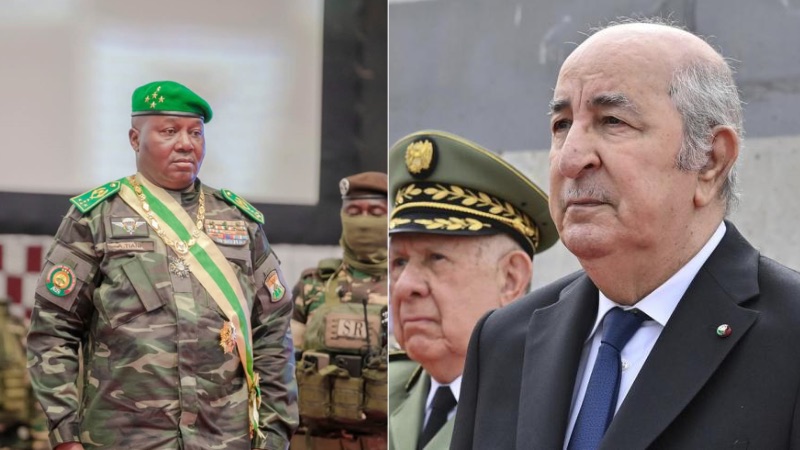
Algeria has already delivered four military helicopters to Niger on August 9, in a move that gives an operational dimension to the fight against jihadists and the trafficking of arms or drugs.
The Algerian-Nigerien military cooperation has reached a new stage. Algeria is no longer content to provide “its support” to the local army but decides to mobilize military troops there. Both chambers of the Algerian Parliament voted behind closed doors this Sunday in favor of sending a unit of the Algerian army to Niger, a first since 1962.
Things to discover
This movement is directly based on the constitutional amendment of 2020 (Article 31), which now allows Algeria to participate in peacekeeping missions outside its borders after parliamentary approval.
The Parliament was seized, in accordance with the Constitution, by the President of the Republic Abdelmadjid Tebboune to decide on the project to install a detachment of the ANP in northern Niger to secure oil sites and strategic energy infrastructures in Niger.
The objective has been clearly defined by the authorities: it is not about engaging in combat, but ensuring a security presence.
This deployment takes place within the framework of a bilateral military cooperation agreement providing for the exchange of expertise in the face of cross-border threats (terrorism, organized crime, trafficking).
The decision by the Algerian authorities to send troops to Niger came after the signing, last Wednesday, of a protocol agreement to strengthen military cooperation between the two countries. The document was signed during the visit to Algeria of the Nigerien Minister of National Defense, Salifou Mody.
On this occasion, Army General Saïd Chanegriha, Minister Delegate to the Algerian Minister of National Defense and Chief of Staff of the Algerian National People’s Army (ANP), expressed “Algeria’s readiness to consider any proposal from the Nigerien side that could strengthen military and security cooperation, in the service of the higher interests of the two brother countries and in accordance with the expressed will of their leaders”.
The protocol agreement in question provides for “cooperation and exchange of experiences in the field of combating terrorism, as well as responding to any project requested by the Nigerien authorities aimed at strengthening the operational capabilities of the Nigerien army”.
For the record, Algeria provided military assistance to Niger last summer by sending fighter jets to Niamey to support the Nigerien authorities during the last coup attempt in that country.
Sahel: Algeria and Niger join forces
Once deployed in Niger, Algerian forces would be called to station at the military base of Madama, in northern Niger, near the Libyan border.
This base was, it should be noted, “an old French support point developed as part of Operation Barkhane.” “This site occupies a strategic position for monitoring the Sahelian spaces and cross-border routes,” according to a former Algerian diplomat, Amar Belani.
Aware of the danger posed by Islamist terrorism in the region, Algeria is becoming more involved in the fight against organized criminal networks and the trafficking of arms or drugs that finance insecurity in the Sahel.
A donation of four helicopters and military equipment to Niger was indeed made on Sunday, August 9, by Algeria, whose security services had recovered German national Ulumaskan Sinan, kidnapped a few weeks earlier in Niger, from the Algerian security services.
Reactivation of joint mechanisms to combat terrorism
The Algerian and Nigerien presidents, Abdelmadjid Tebboune and Abdourahamane Tiani, had indeed decided, during the latter’s visit to Algeria in February 2026, to immediately reactivate the mechanisms for monitoring borders and combating terrorism in the Sahel.
“In the face of the persistence of terrorist threats and organized cross-border crime, the two Heads of State expressed their deep concern and stated that the security of one is inseparable from that of the other,” a joint statement released at the end of the Nigerien head of state’s visit to Algeria mentioned.
In this spirit of active solidarity, the two leaders “agreed to immediately reactivate the relevant Algerian-Nigerien mechanisms to intensify coordination in border monitoring and harmonize strategies to combat terrorism and related scourges.”
The border between Algeria and Niger extends, it should be emphasized, over a length of 951 kilometers in the heart of the Sahara desert. It connects the tripoint with Mali to the west to the tripoint with Libya to the east, mainly revolving around the border post of In Guezzam and the locality of Assamaka on the Nigerien side.
This Saharan area faces significant security challenges related to armed groups, smuggling, and migratory flows. The Algerian army maintains an increased surveillance system there.
Niger, led by a military regime since the coup d’état of July 2023, is indeed facing jihadist violence from groups affiliated with Al-Qaeda and the Islamic State organization, and its army seems overwhelmed by events.
The editorial team recommends
Fancy reading all the articles?
Unlock all articles straight away. No obligation.