An important figure in the history of France and Europe, Talleyrand is inseparable from his château of Valençay.
An important actor in the history of France and Europe, Talleyrand is a personality that still fascinates. Both for his great talents as a diplomat and for his surprising adaptation to the various regimes that occupied the political scene of his time. In 1803, he bought the Château de Valençay. He was appointed grand chamberlain in 1804 and attended the coronation of Napoleon on December 2, 1804.
Published on 4 October 2026
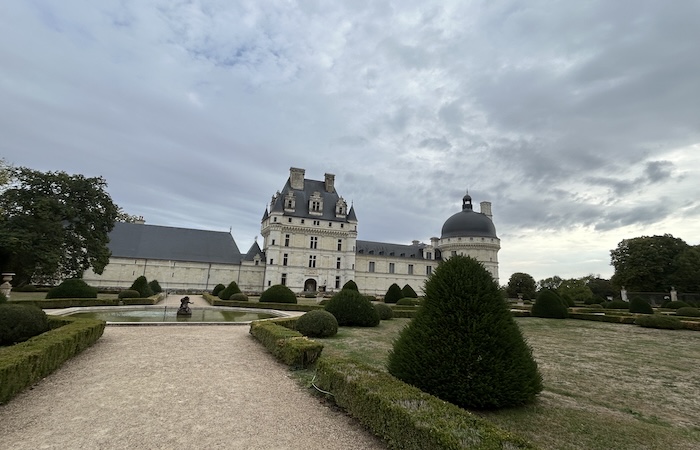
The link with Valençay is summed up in a phrase from Bonaparte in 1803: "I want you to have a beautiful estate, where you will host the diplomatic corps and prominent foreigners in style."
© Rupture
Born in Paris on February 2, 1754, from a very old nobility. A foot deformity prevents him from pursuing a military career. His family deprives him of his birthright and, against his will, destines him for the Church. Seminary of Saint-Sulpice in 1770, theology thesis in 1774, ordained priest in 1779, general vicar of Reims the same year, then general agent of the clergy from 1780 to 1785, he manages the finances of the Church of France before having a bishop’s soul.
Consecrated bishop of Autun on January 4, 1789, elected by the clergy to the Estates-General, he joins the Constitution Committee. He drafts Article 6 of the Declaration of the Rights of Man, launches the metric system, and gives the first report on public education. On November 4, 1789, he proposes to place the clergy’s property at the nation’s disposal. President of the Assembly in 1790, he celebrates the Federation Mass at the Champ-de-Mars.
In December, he takes an oath to the Civil Constitution of the Clergy, resigns from his diocese in January 1791, and consecrates the first oath-taking bishops. Sent to London in 1792, expelled, indicted after the discovery of letters in the iron cupboard, he exiles himself to the United States in 1794. He stays there for two years. Returned thanks to Madame de Staël, he becomes, through Barras, Minister of Foreign Relations.
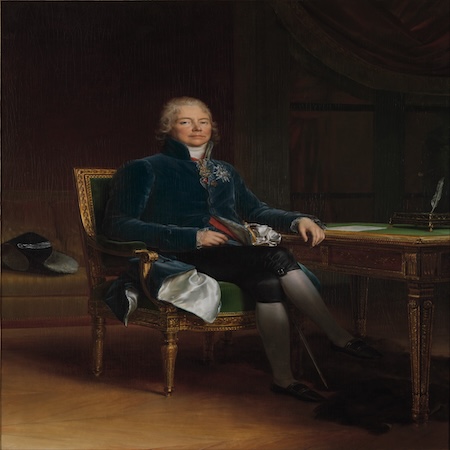
Lame, with a low voice and a mobile face, he is also a seducer. The clubfoot does not change anything; the charm works. Madame de Staël burns for him. Catherine Grand, a superb and poorly educated Creole, becomes his wife, then princess of Bénévent.
Later, at Valençay, Dorothée, Duchess of Dino, his niece by marriage, manages the house and his heart. He pleases with his wit, attention, and well-placed silence.
He is by Bonaparte’s side on the 18th of Brumaire and resumes Foreign Relations under the Consulate and at the beginning of the Empire. In 1801-1802, he prepares the treaties that bring peace to Europe, to France’s advantage. Grand chamberlain in 1804, prince of Bénévent in 1806. He negotiates Presbourg (1805) and Tilsit (1807). It is there that he doubts.
Carême, future “king of chefs and chef of kings,” forges modern cuisine there; Talleyrand makes it an instrument: “One does not conduct good diplomacy without good lunches.
Worried about Napoleon’s unchecked ambition, he resigns his portfolio in August 1807 and withdraws. Disgraced in January 1809, he loses the grand chamberlaincy. In 1813, he refuses to return to Foreign Affairs. On April 1, 1814, the Senate appoints him head of the provisional government. He signs the armistice with the Allies. Minister again in May, he signs the Treaty of Paris on the 30th. Louis XVIII sends him to Vienna: there he divides the coalitions and saves France from dismemberment.
President of the Council for a few months in 1815, again grand chamberlain, he must yield to the ultras. In 1830, he aligns with Orléans, serves the July monarchy, and from 1830 to 1834, as ambassador in London, he negotiates Belgium’s independence. He was called a traitor. He replied that he had never betrayed anything but dead regimes.
The link with Valençay is summed up in a phrase from Bonaparte in 1803: “I want you to have a beautiful estate, where you will host the diplomatic corps and prominent foreigners in style.” On May 17, he buys the Valençay estate, Luçay-le-Mâle, and Veuil for about 1.6 million francs. Bonaparte encourages the purchase and finances a large part of it. About 12,000 hectares. Renaissance castle, completed in the 18th century by the farmer general Legendre de Villemorien. Talleyrand visits it little as long as the Empire occupies him.
He brings in Marie-Antoine Carême, whom he keeps for twelve years, and challenges him to a year of menus without repetition, seasonal products, as beautiful as they are good. Carême, future “king of chefs and chef of kings,” forges modern cuisine there; Talleyrand makes it an instrument: “One does not conduct good diplomacy without good lunches.
The family retains the estate until 1979
Vienna is proof of this; to Louis XVIII, who hands him a bundle of instructions, he replies that he needs pots more than papers, and takes Carême with him for seven months at the Kaunitz palace, where the French table dazzles the plenipotentiaries. Treaties are forged as much in salons as in front of dishes. Alexander I would later say: “He taught us to eat; we did not know how.” Carême would summarize that his cuisine had been the avant-garde of French diplomacy.
The other episode of the place is the captivity of the Spanish princes. After Bayonne, Napoleon imposes on him to host Ferdinand VII, Don Carlos, and Don Antonio from 1808 to 1814. Golden prison, etiquette regulations, Italian-style theater. The treaty that restores the throne to Ferdinand bears the name of the castle: Treaty of Valençay, December 11, 1813.
After 1815, sidelined despite the Vienna agreement, he returns there a few months a year until his death, with Dorothée. Commons, orangery, English-style park, small theater in 1819. As mayor of Valence, he opens a school, raises the bell tower, and donates land for the town hall. He also becomes a general councilor. The prefect of Indre writes in 1825 that there are no beggars or absolute needy in Valençay. He dies in Paris on May 17, 1838, reconciled at the last moment with the Church, and rests in the chapel of the park of the Château de Valençay. The family retains the estate until 1979.
His impact can be summed up in a few words. He transitioned France from one regime to another without delivering it. He invented, with the Declaration of Man, the school and the meter, instruments that are still common to us. He showed that a table, charm, and a well-placed phrase sometimes weigh more than an army. And he left, at Valençay, the residence where this politics was tangible.
The editorial team recommends
Fancy reading all the articles?
Unlock all articles straight away. No obligation.