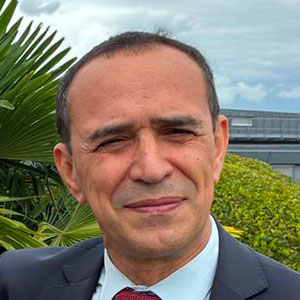
What there is of Augustin in Léon
On May 8, 2025, on the evening of his election, Cardinal Robert Francis Prevost appeared at the loggia of Saint Peter's and introduced himself immediately with, "I am an Augustinian, a son of Saint Augustine." These words were not a mere formula of politeness; they outlined the spiritual, theological, and pastoral framework of an entire papacy.
Published on 23 September 2026

In a world saturated with screens, noise, and superficiality, Augustine teaches to "listen to the inner Master," recalls Léon.
As the first pope from the Order of Saint Augustine and the first pontiff born in the United States, Léon XIV has chosen to place his ministry under the patronage of the greatest Latin Father of the Church. This is neither a coincidence nor a simple sentimental attachment. It is the fruit of a whole life.
Things to discover
A journey entirely marked by Augustine
Born in Chicago on September 14, 1955, Robert Prevost entered the Augustinians in 1977. He made his first vows in 1978, his solemn vows in 1981, and was ordained a priest in 1982. A missionary in Peru for over two decades, he then became the Prior General of the Order from 2001 to 2013. During these twelve years, he governed a religious family spread across all continents, visiting communities, forming, listening, and tirelessly meditating on the work of Augustine.
When he received the Saint Augustine medal from the Villanova province in the summer of 2025, he confided: “So much of who I am, I owe to the spirit and teachings of Saint Augustine.” Later, a collection of his writings as Prior General was published under the title Free Under Grace, a phrase taken from Augustine’s Rule itself, living “not as servants under the Law, but as free men under grace.”
His papal coat of arms reflects this: a Marian fleur-de-lis on one side, a flaming heart pierced by an arrow placed on a book on the other, the traditional emblem of the Augustinians, with the motto In Illo uno unum : “In Him who is one, we are one.” His pectoral cross contains relics of Augustine and Saint Monica. In April 2026, he traveled to Annaba, the former Hippo, walked among the ruins of the basilica where Augustine preached, planted an olive tree, and reflected where his spiritual father lived, wrote, and died.
Who is Saint Augustine for Léon XIV?
For the pope, Augustine is not just a fifth-century author. He is a companion on the journey, a model of conversion, a master of interiority, and a brother in the search for God.
Augustine (354-430), an African from Tagaste, a brilliant rhetorician, a lover of wisdom, went through Manichaeism, skepticism, and pleasures before converting at 32 under the influence of his mother Monica and the preaching of Ambrose of Milan. His heart “restless until it rests in You” (Confessions) is for Léon XIV the very portrait of contemporary man. The pope likes to remind us that Augustine’s holiness was not immediate: “His life was full of trials and errors, like ours. But by the grace of God, through the prayers of his mother Monica and the community of good people surrounding him, Augustine was able to find the path to peace for his restless heart.”
Augustine is also, for him, the master of unity. The famous formula repeated from the very first evening, “With you I am a Christian, for you I am a bishop,” expresses a humble conception of authority; the pope is not above the people of God, he walks with them. The Church is not a cold institution, but “all those who are in agreement with their brothers and who love their neighbor.”
Finally, he is the theologian of grace and charity. In The City of God, Augustine distinguishes the earthly city, marked by self-love to the contempt of God, and the City of God, founded on the love of God to the gift of self. Léon XIV draws from this a key to understanding the world, moving from “selfish, shortsighted, and destructive love” to “a free and generous love, rooted in God and leading to the gift of self.”
Why place an entire papacy under Augustine?
Léon XIV places his papacy under Augustine because Augustinianism responds, in his view, to the wounds of our time. First, unity. In a polarized Church and a fragmented world, the motto In Illo uno unum is not a convenient ecumenical slogan; it asserts that unity is not manufactured through diplomatic compromises but is given in Christ. Léon XIV sees this as the foundation of intra-ecclesial communion, ecumenism, and even interreligious dialogue.
Next, interiority. In a world saturated with screens, noise, and superficiality, Augustine teaches to “listen to the inner Master,” that voice that speaks deep within the heart. The pope tells educators that truth does not spread through corridors and loudspeakers, but in the deep encounter between people. He invites filtering out “the noise, the divisive voices in our heads and hearts.”
Then grace. Augustinianism reminds us that man does not save himself through his performances; in an age obsessed with efficiency, merit, and self-optimization, “free under grace” is a radical counter-proposal; true freedom arises from acceptance, not conquest.
Finally, charity as the fundamental law of society. Augustine does not invite us to flee the world but to inhabit it differently. Léon XIV takes up this intuition to speak of peace, justice, defense of the poor, and a “civilization of love.” He loves to quote, “Let us live well, and the times will be good. We are the times.” In other words, history is not a fatality; it is played out in the concrete choices of those who love.
What Augustine can bring to faith and Catholic reflection today
The contribution of Augustine, as Léon XIV rereads it, is both spiritual, intellectual, and pastoral. On a spiritual level, he rehabilitates desire. The restless heart is not a defect to be corrected but a sign that man is made for the infinite. In a society that promises immediate happiness and then wonders about malaise, Augustine offers a language to name this thirst and direct it towards God. Augustinian interiority, “You were more interior than my most intimate intimacy,” allows us to rediscover a depth that the digital world has often flattened.
On a theological level, he corrects two opposing temptations. On one side, a moralism that reduces Christianity to a code of conduct. On the other, a sentimentalism that forgets the truth. Augustine unites truth and charity, intelligence and love, grace and freedom. He allows us to think together about personal conversion and collective responsibility, the City of God and engagement in the earthly city, without confusing them.
On an ecclesial level, he offers a vision of the Church as a communion of friends on the way to God. Augustine’s Rule emphasizes communal life, sharing of goods, and mutual listening. Léon XIV sees this as an antidote to individualism and polarization. The art of listening before speaking, which he explicitly connects to Augustine, nourishes synodality, listening to the Spirit, listening to brothers, and especially listening to the poor and the margins.
On a social and political level, The City of God remains strikingly relevant. It prevents the sacralization of power or despairing of history. It calls Christians to be in the world without being of the world, to serve the common good without idolizing any earthly city. Léon XIV uses it to speak of peace, dialogue, respect for human dignity, and religious freedom.
On an educational level, the pope has identified four Augustinian values for teachers: interiority, unity, love, and joy. Transmitting knowledge is not enough; one must love those to whom one teaches. Education then becomes a place of encounter and not just a simple technical transmission.
A papacy of restless heart and communion
Placing his papacy under Saint Augustine, for Léon XIV, is not to take refuge in the fifth century. It is to choose a companion capable of speaking to the twenty-first century. Augustine experienced the collapse of a world (the capture of Rome in 410), doctrinal divisions, the temptation of despair, and the grace of a conversion always to be resumed. He thought of love as the center of everything, community as the path to God, and humility as the condition of authority.
By calling himself “a son of Saint Augustine,” Léon XIV does not define himself solely by a religious affiliation. He indicates the style he wants to give to the Church: a Church that listens before speaking, that unites without uniformity, that seeks God in the innermost part of man, that loves the world without losing itself in it, and that walks “hand in hand with God and with one another.”
The pierced heart of the papal coat of arms is not an ornament. It is the program: a heart inflamed by the love of God and wounded by the love of men, placed on the Book, so that “in Him who is one, we may be one.”
The editorial team recommends
- Why we cannot not call ourselves Christians…
- Pope Leo XIV will deliver a speech at the UNESCO headquarters.
Fancy reading all the articles?
Unlock all articles straight away. No obligation.